
Care Of Your Child's Teeth
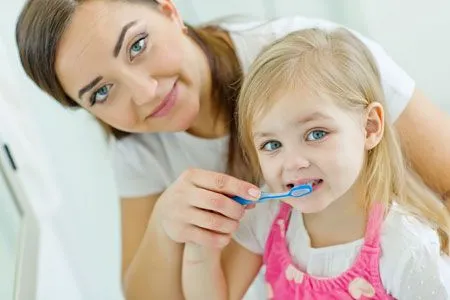
- Starting at birth, clean your child's gums with a soft cloth and water
- As soon as your child's teeth erupt, brush them with a soft-bristled toothbrush
- If they are under the age of 2, use a small "smear" of toothpaste
- If they're 2-5 years old, use a "pea-size" amount of toothpaste
- Be sure and use an ADA-accepted fluoride toothpaste and make sure your child does not swallow it
- When brushing, the parent should brush the child's teeth until they are old enough to do a good job on their own
Flossing Tips:
- Flossing removes plaque between teeth and under the gum-line where a toothbrush can't reach
- Flossing should begin when any two teeth touch
- Be sure and floss your child's teeth daily until he or she can do it alone
How Do I Prevent Cavities?
American Academy of Pediatric Dentistry (AAPD) recommends visits every six months to the pediatric dentist, beginning at your child’s first birthday. Routine visits will start your child on a lifetime of good dental health
Good oral hygiene removes bacteria and the left over food particles that combine to create cavities. For infants, use a wet gauze or clean washcloth to wipe the plaque from teeth and gums. Avoid putting your child to bed with a bottle filled with anything other than water. For older children, brush their teeth at least twice a day. Also, watch the number of snacks containing sugar that you give your children
Your pediatric dentist may also recommend protective sealants or home fluoride treatments for your child. Sealants can be applied to your child’s molars to prevent decay on hard to clean surfaces
Seal Out Decay
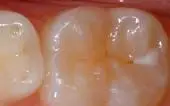
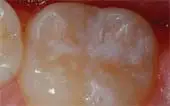
A sealant is a protective coating that is applied to the chewing surfaces (grooves) of the back teeth (premolars and molars), where four out of five cavities in children are found. This sealant acts as a barrier to food, plaque and acid, thus protecting the decay-prone areas of the teeth
| 
|
Fluoride
Fluoride is a naturally occurring element, which has shown to prevent tooth decay by as much as 50-70%, Despite the advantages, too little or too much fluoride can be detrimental to the teeth. With little or no fluoride, the teeth aren’t strengthened to help them resist cavities. Excessive fluoride ingestion by young children can lead to dental fluorosis, which is typically a chalky white discoloration (brown in advanced cases) of the permanent teeth. Be sure to follow your pediatric dentist’s instructions on suggested fluoride use and possible supplements, if needed
You can help by using a fluoride toothpaste and only a smear of toothpaste (the size of a grain of rice) to brush the teeth of a child less than 3 years of age. For children 3 to 6 years old, use a "pea-size" amount of toothpaste and perform or assist your child’s toothbrushing. Remember that young children do not have the ability to brush their teeth effectively on their own
Note: Children should spit out and not swallow excess toothpaste after brushing, in order to avoid fluorosis
Xylitol - Reducing Cavities
The American Academy of Pediatric Dentistry (AAPD) recognizes the benefits of xylitol on the oral health of infants, children, adolescents, and persons with special health care needs
The use of XYLITOL GUM by mothers (2-3 times per day) starting 3 months after delivery and until the child was 2 years old, has proven to reduce cavities up to 70% by the time the child was 5 years old
Studies using xylitol as either a sugar substitute or a small dietary addition have demonstrated a dramatic reduction in new tooth decay, along with some reversal of existing dental caries. Xylitol provides additional protection that enhances all existing prevention methods. This xylitol effect is long-lasting and possibly permanent. Low decay rates persist even years after the trials have been completed
Xylitol is widely distributed throughout nature in small amounts. Some of the best sources are fruits, berries, mushrooms, lettuce, hardwoods, and corn cobs. One cup of raspberries contains less than one gram of xylitol
Studies suggest xylitol intake that consistently produces positive results ranged from 4-20 grams per day, divided into 3-7 consumption periods. Higher results did not result in greater reduction and may lead to diminishing results. Similarly, consumption frequency of less than 3 times per day showed no effect
To find gum or other products containing xylitol, try visiting your local health food store or search the Internet to find products containing 100% xylitol
Good Diet = Healthy Teeth

How long food remains in the mouth also plays a role. For example, hard candy and breath mints stay in the mouth a long time, which cause longer acid attacks on tooth enamel. If your child must snack, choose nutritious foods such as vegetables, low-fat yogurt, and low-fat cheese, which are healthier and better for children’s teeth
Mouth Guards
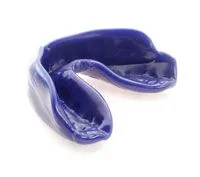
Mouth guards help prevent broken teeth, and injuries to the lips, tongue, face or jaw. A properly fitted mouth guard will stay in place while your child is wearing it, making it easy for them to talk and breathe. Ask your pediatric dentist about custom and store-bought mouth protector.
Beware of Sports Drinks
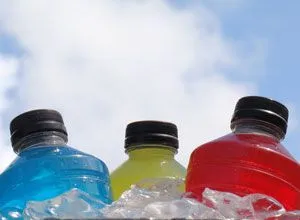
If sports drinks are consumed:
- Reduce the frequency and contact time.
- Swallow immediately and do not swish them around the mouth.
- Neutralize the effect of sports drinks by alternating sips of water with the drink.
- Rinse mouth-guards only in water.
- Seek out dentally friendly sports drinks
If you have questions or concerns about any of these topics, please contact our office